

Free New Puppy Checklist: 20 Things You Actually Need (and What to Skip!)
This post may contain affiliate links. We may earn a small commission at no extra cost to you. Affiliate Disclosure.
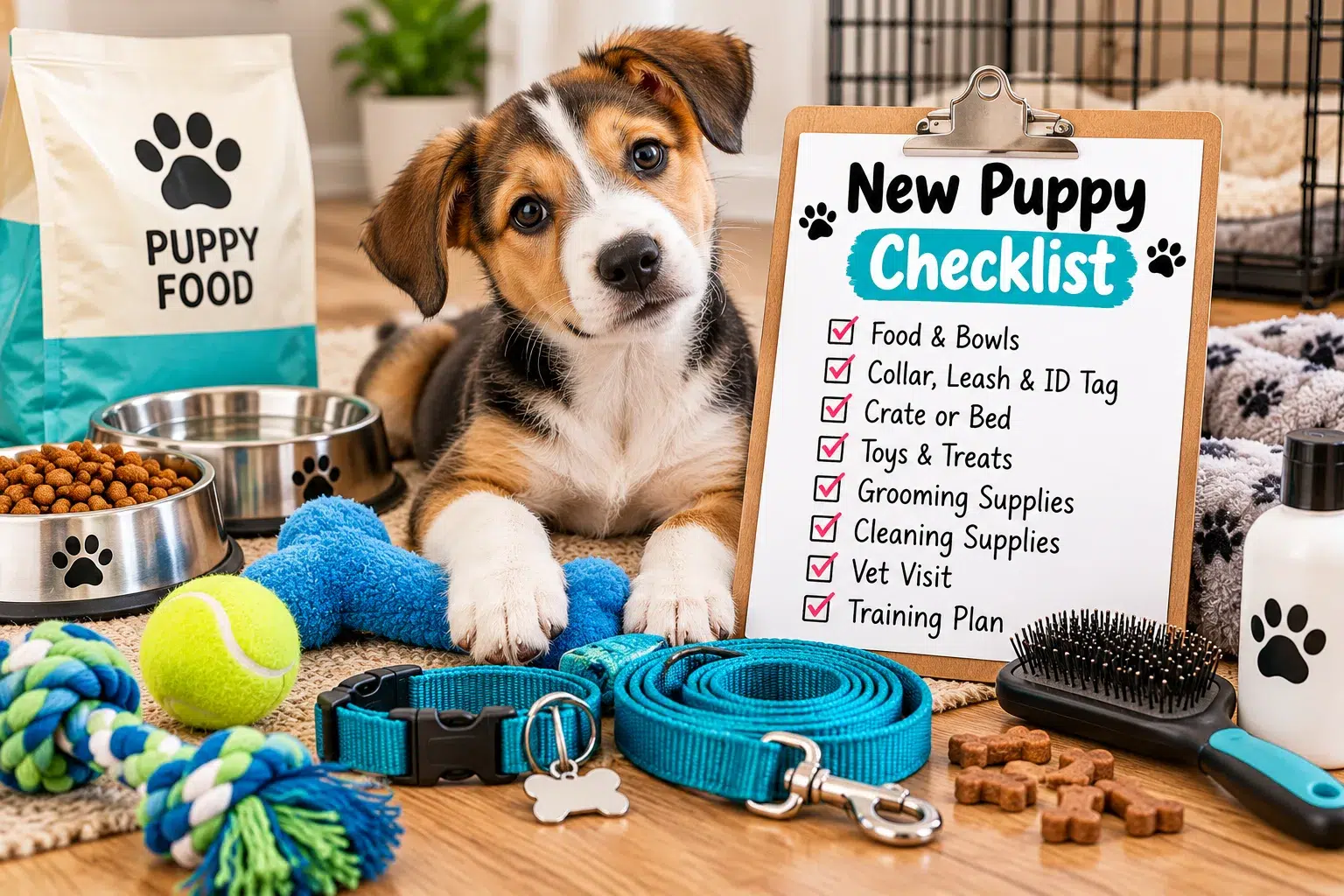
Bringing home a new puppy? Before you buy every adorable dog toy, fancy bed, and matching accessory at the pet store, let’s talk about what you actually need!
Getting a new dog is exciting, but those first shopping trips can add up FAST. Between food, toys, grooming supplies, and everything else, it’s easy to spend hundreds of dollars before your new best friend even walks through the door.
The good news? You don’t need to spend a fortune to give your puppy a great start. Some of the best supplies are surprisingly inexpensive, and there are plenty of things you can skip altogether.
I’ve put together a practical new puppy checklist with 20 essentials, helpful shopping tips, and a few things you can wait to buy. Most of these recommendations also apply when adopting an adult dog!
FREE Printable New Puppy Checklist
Before you head to the store, grab our FREE printable checklist! Keep it handy while shopping so you don’t forget anything important or waste money on things you don’t really need.
20 Things You Actually Need for a New Puppy
Food & Feeding Essentials
1. Age-Appropriate Puppy Food
Food is one area where you don’t want to choose based on price alone. Puppies need nutrition that supports their growth, and large-breed puppies may have different requirements than smaller breeds.
Before bringing your puppy home, ask the breeder, shelter, or rescue what food they’re currently eating. Starting with the same food can help avoid an upset stomach. If you decide to switch brands, make the change gradually.
You also don’t have to buy the most expensive bag on the shelf. Look for food labeled complete and balanced for your puppy’s life stage, and ask your veterinarian for recommendations.
2. Food Bowl
Skip the fancy designer bowls! A basic stainless steel food bowl is inexpensive, durable, and easy to wash. Unlike some plastic bowls, stainless steel is less likely to develop scratches that can trap food residue.
Choose a size appropriate for your puppy, and consider a nonslip bottom if your new friend likes pushing the bowl across the kitchen.
3. Water Bowl
Your puppy needs access to fresh drinking water throughout the day. A second stainless steel bowl works perfectly, and there’s no need to purchase an expensive automatic fountain right away.
Look for something sturdy enough that an enthusiastic puppy won’t tip it over every five minutes!
4. Puppy Training Treats
Small training treats are worth having from day one. You’ll use them for teaching your puppy to sit, come when called, walk politely, and go potty outside.
Look for small, soft treats that are easy to chew quickly. You can also use a portion of your puppy’s regular kibble for training, which saves money and helps avoid overfeeding.
Walking & Safety Essentials
5. Adjustable Puppy Collar
Puppies grow quickly, so an adjustable collar is usually your best bet. There’s no reason to spend a fortune on something your dog might outgrow in a couple of months.
Choose a lightweight collar that fits comfortably. You should generally be able to slip two fingers underneath it, but it shouldn’t be loose enough to slide over your puppy’s head.
Check the fit frequently as your puppy grows, and remove collars when they could become caught during unsupervised crate time or play.
👉 Shop Adjustable Puppy Collars
6. Personalized Dog ID Tag
This is one of the cheapest and most important things on the list. If your puppy slips out of the house or gets loose during a walk, an ID tag gives someone a quick way to contact you.
Include your phone number and any other information you’re comfortable sharing. A microchip provides an additional layer of protection, but a visible tag makes it easier for someone to reach you immediately.
7. Standard Dog Leash
For everyday walks and puppy training, a basic 4- to 6-foot leash is usually all you need.
Retractable leashes might seem convenient, but they can make it harder to maintain control, especially when you’re teaching a puppy not to pull or chase everything that moves.
Look for a sturdy clip, comfortable handle, and a leash appropriate for your dog’s size.
8. Comfortable Dog Harness
A harness can make walks easier, especially for puppies still learning leash manners. It also helps avoid putting unnecessary pressure on the neck when a puppy suddenly lunges toward a squirrel.
Look for an adjustable design that allows natural movement without rubbing behind the front legs. For puppies that pull, a properly fitted front-clip harness may be helpful during training.
Remember that a harness isn’t a substitute for teaching good leash habits!
9. Pet Gate or Puppy Playpen
You probably don’t want your new puppy exploring every room in the house unsupervised. That’s where a pet gate or playpen comes in handy.
Use one to block off stairs, keep your puppy out of certain rooms, or create a safe play area while you’re cooking or cleaning.
Before buying new, check local resale groups or thrift stores. Just make sure any secondhand gate is sturdy, has all its parts, and doesn’t have openings where a puppy could become trapped.
Sleeping & Comfort Essentials
10. Dog Crate or Safe Sleeping Area
A crate can be helpful for house training, safe travel, and giving your puppy a quiet place to relax. It should be large enough for your dog to stand, turn around, and lie down comfortably.
If you’re getting a breed that will grow considerably, look for a crate with an adjustable divider. That way, you won’t need to purchase several different sizes as your puppy grows.
Introduce the crate with treats, praise, and short positive experiences. Never use it as punishment, and avoid leaving puppies confined longer than they can comfortably handle.
👉 Shop Dog Crates with Dividers
11. Washable Dog Bed or Blanket
Here’s where you can save some serious money. Your puppy does NOT need a $100 designer dog bed! Puppies have accidents, chew on things, and grow faster than you can imagine. That expensive bed might not survive the first few weeks!
Start with an inexpensive, machine-washable dog bed, crate mat, or soft blanket. Look for something that’s easy to clean and durable enough for everyday use. A removable, washable cover is a bonus, especially while you’re working on potty training.
You can even use a clean blanket you already have at home. Just avoid loose stuffing, strings, or anything your puppy might chew and swallow. If your puppy is a serious chewer, supervise bedding use until you know they can safely have it.
Once your puppy is fully grown and past the destructive chewing stage, you can always upgrade to something fancier!
👉 Shop Affordable Washable Puppy Beds on Amazon
12. Safe Puppy Chew Toys
Puppies chew EVERYTHING. Shoes, furniture legs, remote controls, and anything else they can get their little teeth on. Having a few good chew toys ready can save you a lot of frustration and potentially expensive replacements.
Choose toys specifically designed for puppies and appropriate for their size and chewing strength. Softer puppy chew toys and treat-stuffable rubber toys are good starting points. Avoid anything so hard that it could damage teeth, and throw away toys that become torn or small enough to swallow.
You don’t need a giant toy basket right away. Start with two or three different textures and see what your puppy likes!
👉 Shop Puppy Chew Toys on Amazon
Cleaning & Grooming Essentials
13. Dog Poop Bags
Not glamorous, but absolutely necessary! Whether you’re taking your puppy for a walk around the neighborhood, visiting a park, or cleaning up the backyard, you’ll go through plenty of poop bags.
Buying larger refill packs usually costs less per bag. A small dispenser that clips onto your leash is handy because you’ll always have a bag when you need one.
14. Enzymatic Pet Stain & Odor Cleaner
Even the smartest puppy is going to have an accident or two. Regular household cleaners may remove visible stains without completely eliminating the odor.
An enzymatic pet cleaner is designed to break down organic messes and can help prevent lingering smells that encourage repeat accidents.
Look for a product suitable for your flooring or upholstery, follow the label directions, and keep your puppy away from treated areas until they’re safe to use.
👉 Shop Pet Stain & Odor Cleaners
15. Dog Brush or Comb
Even short-haired puppies benefit from regular brushing. It helps remove loose hair, keeps their coat looking good, and gets them comfortable with being handled.
The right brush depends on your dog’s coat. A soft bristle brush or grooming mitt may work for a short coat, while longer or curlier coats may require a slicker brush and comb.
Start with short, gentle sessions and plenty of praise. Making grooming a positive experience now can make life much easier later!
16. Gentle Puppy Shampoo
Puppies have a special talent for finding mud, dirt, and anything else messy. Having a bottle of puppy-safe shampoo ready is a good idea.
Choose a gentle shampoo made specifically for dogs. Human shampoos aren’t necessarily appropriate for their skin, and heavily scented products can be irritating.
You don’t need an entire collection of grooming products. One suitable shampoo is enough to start, and your veterinarian can recommend something different if your puppy has sensitive skin.
17. Dog Nail Clippers or Grinder
Those tiny puppy nails can be surprisingly sharp! Regular nail care helps keep your puppy comfortable and prevents nails from growing too long.
You can use appropriately sized dog nail clippers or a pet nail grinder. Either way, introduce the tool slowly and reward your puppy for staying calm.
If you’re nervous about cutting nails, ask your veterinarian or groomer to show you how. Cutting into the quick can be painful and cause bleeding, so don’t rush it.
👉 Shop Dog Nail Clippers & Grinders
18. Dog Toothbrush & Toothpaste
Dental care is one of those things that’s easier to start early than introduce to a stubborn adult dog!
Begin by gently touching your puppy’s mouth and rewarding them for cooperating. Once they’re comfortable, introduce a dog toothbrush and toothpaste made specifically for pets.
Never use human toothpaste, since some ingredients can be harmful to dogs. You don’t need an expensive dental kit, either. A basic pet toothbrush and dog-safe toothpaste will do.
Health & Training Essentials
19. A Veterinary Appointment
This isn’t something you can toss into your Amazon cart, but it’s one of the most important things on the checklist.
Schedule a new-puppy appointment shortly after bringing your dog home. Your veterinarian can review vaccination records, recommend parasite prevention, discuss microchipping, and help you establish a healthy feeding and care routine.
Ask about the costs of routine visits, vaccines, and preventive medications so you can budget ahead. Some local shelters, humane societies, and community clinics may offer lower-cost services.
Don’t forget to save your veterinarian’s number and the contact information for a nearby emergency animal hospital!
20. A Basic Puppy Training Plan
You don’t need to hire an expensive trainer the minute your puppy comes home, but you do need a plan.
Start with the basics: house training, responding to their name, sitting, coming when called, and learning to walk on a leash. Short, positive training sessions throughout the day are usually more productive than one long session.
A treat pouch can be useful for keeping rewards handy, especially when you’re working on outdoor training. You can also find puppy training books and guides if you prefer having instructions to follow.
👉 Shop Puppy Training Supplies
New Puppy Supplies You Can Buy Later
Here’s where you can save some money! Pet stores are full of things that look useful, but not everything needs to come home with your puppy on day one.
- Fancy dog beds: Puppies have accidents, chew things, and grow quickly. Start with inexpensive washable bedding and upgrade later.
- Huge toy collections: Start with a few safe toys instead of buying everything you see. You’ll quickly discover whether your puppy prefers squeaky toys, rubber chews, or soft plush toys.
- Specialty food bowls: Basic bowls work for most dogs. Slow feeders can be helpful for puppies that gulp their food, but you don’t need one unless there’s a reason.
- Dog clothes: Adorable? Absolutely. Essential? Usually not. Some small, short-haired, or cold-sensitive dogs may benefit from a properly fitted coat in chilly weather.
- Automatic feeders and fountains: Convenient for some households, but a regular feeding schedule and basic water bowl work just fine.
- Pee pads: These can be useful for apartment living, certain medical needs, or situations where outdoor access is difficult. However, they aren’t required for every house-training routine.
- Dog strollers: Helpful for some dogs with mobility limitations, but definitely not a must-have for most healthy puppies.
- Fancy toy storage: An old basket or container you already own works just as well. Keep storage out of reach if your puppy likes chewing baskets.
How to Save Money on New Puppy Supplies
There’s no reason to pay full price for everything on your new puppy shopping list. A little comparison shopping can save quite a bit, especially when you’re buying several items at once.
Check Dollar Stores First
Dollar stores can be great for inexpensive bowls, storage containers, cleaning supplies, and basic accessories. Just inspect pet products carefully for sharp edges, loose pieces, or anything that could be swallowed.
Compare Amazon Prices
Amazon can be especially convenient for comparing sizes, styles, and customer reviews. Check multipacks for poop bags, basic grooming supplies, and other items you’ll use regularly.
👉 Browse Puppy Supplies on Amazon
Look for Secondhand Crates and Gates
Check local resale groups, thrift stores, and neighborhood marketplaces for crates, playpens, and pet gates. These can be expensive when purchased new, and many are easy to clean.
Inspect used items for broken latches, sharp edges, missing hardware, and unsafe openings before bringing them home.
Buy the Right Size, Not the Most Expensive Brand
That tiny puppy collar might fit for only a few weeks. Choose adjustable products when possible, and avoid spending extra on accessories your dog will quickly outgrow.
Don’t Cut Corners on Safety
Saving money is great, but a few things deserve extra attention: properly fitting collars and harnesses, nutritious food, veterinary care, and toys that won’t easily break apart.
Before Bringing Your New Puppy Home
Buying the supplies is only half the job. You’ll also want to puppy-proof your home before your new family member arrives.
- Move medications, cleaning products, and household chemicals out of reach.
- Secure electrical cords and remove small objects that could be swallowed.
- Check your yard and fencing for gaps or escape routes.
- Choose a quiet, comfortable sleeping area.
- Decide where your puppy will eat and drink.
- Set up a designated bathroom area and plan frequent potty breaks.
- Put shoes, children’s toys, and other tempting items away.
- Remove toxic plants and keep dangerous foods out of reach.
- Schedule your first veterinary appointment.
- Make sure everyone in the family understands the basic puppy rules.
One more tip: Puppies need plenty of sleep! Don’t feel like you have to entertain your new dog every minute of the day. A consistent routine with meals, bathroom breaks, playtime, training, and rest will make those first few weeks much easier.
Don’t Forget Your FREE Printable New Puppy Checklist!
Whether you’re adopting from a shelter, bringing home a puppy from a breeder, or welcoming an older rescue dog, being prepared makes the transition easier for everyone.
And remember, your puppy doesn’t care whether their food bowl cost $5 or $50. What matters most is a safe home, good care, patience, and plenty of love.
Print our FREE checklist before you shop and cross off everything you already have!