


The Ultimate Guide to Homeowners Insurance Claims: What I Learned the Hard Way
This post may contain affiliate links. We may earn a small commission at no extra cost to you. Affiliate Disclosure.
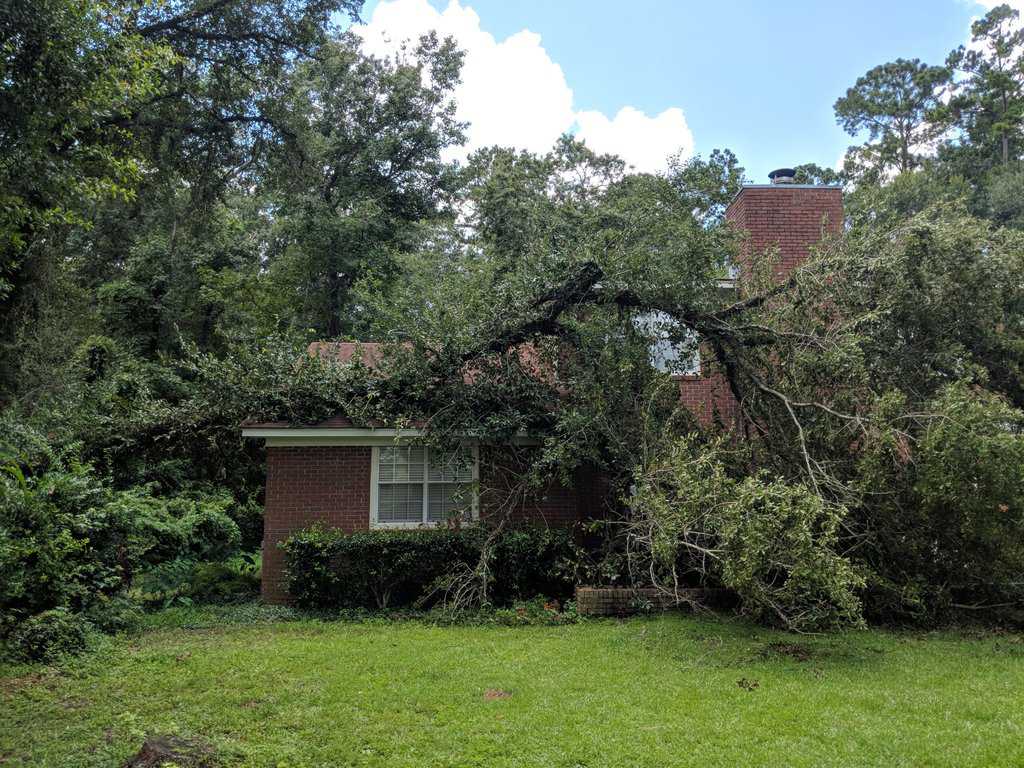
The Ultimate Guide to Dealing with a Homeowners Insurance Claim
Yes, that is my house in the photo above. A few months ago, a massive tree fell onto our roof during a bad storm. It wasn’t even a hurricane—just a regular storm with bad luck.
Dealing with an insurance claim is stressful, but I learned a LOT about how to protect yourself and ensure you actually get paid. With hurricane season always around the corner, I documented everything to help you “cover your butt” if disaster strikes.
DISCLAIMER: I am NOT an insurance agent or a lawyer. I’m just a homeowner who lived through this and want to share what I learned from the trenches!
Step 1: The “Before the Claim” Prep
You need proof of what you own. Just telling an adjuster you had a $10,000 diamond ring or a top-of-the-line laptop won’t cut it. You need documentation.
- Digital Off-Site Storage: Keep a copy of your policy and dec page in Dropbox, Google Drive, or email it to a family member. If your house is gone, you need that info on your phone!
- The “Hurricane Scroll”: Before every storm, I walk through the house with my phone and record a video. Open every closet, every drawer, and every cabinet.
- Identify High-Value Items: Take specific photos of serial numbers on electronics and receipts for jewelry or collectibles.
Step 2: Understanding the Timeline
Most claims follow this specific mechanical order. Knowing this helps you manage your expectations:
- File the Claim: Contact your agent or use the company website immediately.
- Adjuster Assigned: A professional is sent to assess the damage.
- The Report: The adjuster files their assessment with the carrier.
- Internal Review: The company reviews the numbers for accuracy.
- Approval & Check: Larger claims require a manager’s signature before the check is cut (minus your deductible).
⚠️ THE BIGGEST TRAP: The “AND” Check
For large claims, the insurance company will likely include your Mortgage Company as a payee. The check will read: Owner 1 AND Owner 2 AND Mortgage Company. Because it says “AND,” you cannot deposit it until the mortgage company endorses it. They will kick it back if you try to skip this step!
Step 3: What to do RIGHT NOW
1. Secure the Property
Make sure your family is safe, then prevent further damage. Cover holes with tarps and board up broken windows.
Most insurance companies require you to take reasonable steps to prevent more damage from happening (like mold or rain).
2. Document EVERYTHING
Get a dedicated notebook. Write down every person you talk to, the time of the call, and what was said. If this ends up in court or mediation, this notebook is your best friend.
Take photos of the damage from every possible angle before you move anything.
3. Be Ready for the Adjuster
Our adjuster took 2 hours. He photographed the inside of my kitchen cabinets just to prove there was no water damage there! He will ask a lot of questions.
Note: You can refuse to answer invasive financial questions that don’t pertain to the damage. I did, and I still got paid.
💡 SWAG MONEY HACK: Start getting independent contractor quotes the second the damage happens. You don’t have to wait for the insurance check. Having 2-3 licensed and insured quotes in hand helps you negotiate if the insurance company’s initial offer is too low.
Our check took 5 weeks. I’ve known people whose claims took 7 months. The keys to success are persistence, documentation, and patience.
Have you lived through an insurance nightmare? Share your tips in the comments below to help our community!
Check out my Hurricane Preparedness Tips & Tricks!